Monday 5.23
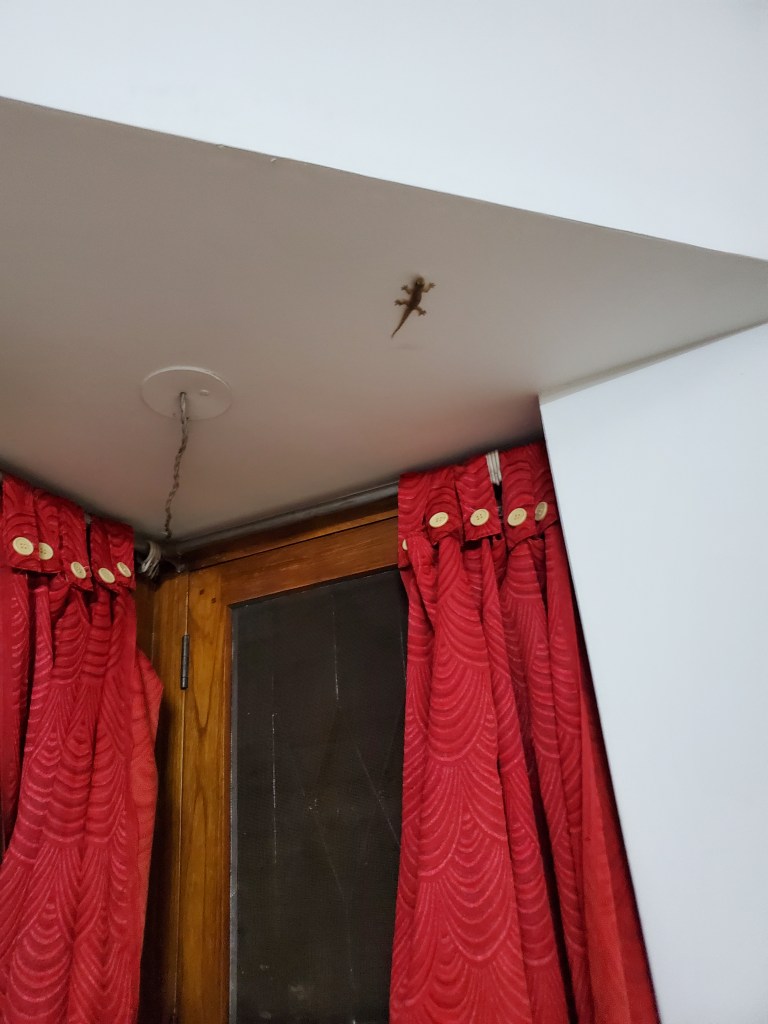
THERE’S A LIZARD ON THE CEILING. oh my heck I don’t know what to do. I went to close the blinds, and it appeared out of nowhere.
It’s fifteen minutes later, and it finally scampered away. Thank goodness.
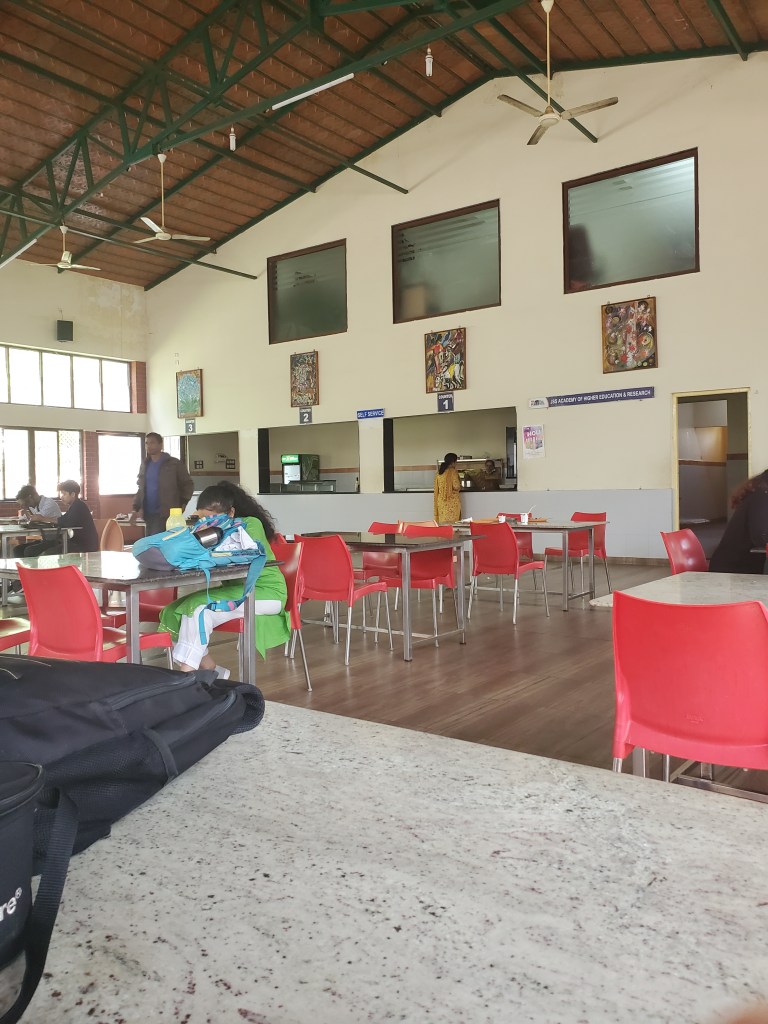
Amphibious visitors aside, today was actually pretty productive. This morning, Anisa and I visited the CEMR (Center of Excellence in Molecular Biology and Regenerative Medicine) lab at JSS Medical College where I will be conducting the bulk of my lab work this summer. There, we ran the lab protocol to isolate miRNA from serum samples using the Qiagen miRNeasy kit. I also met Medha, the PhD student at JSS tasked with the miRNA project. For lunch, Kavitha, Anisa, and I stopped at the canteen for dosa, which was only 45 rupees and pretty tasty – much better than the food they served in my school cafeterias.
Here’s a few things about labs here that surprised me:
- Lab coats are only reserved for medical students. PhD scholars and MSc students are not permitted to wear them in the lab. Anisa told me that white coats grant certain privileges to the MBBS students, such as not being pulled over by the police. I was later informed that even though PhD students have petitioned in the past to wear lab coats, there is some rule at JSS that only allows MBBS students to wear them.
- Nearly no one wears closed-toe shoes in the lab. While some students will wear sandals with stockings, others have a designated pair of flip-flops they’ll wear in the lab. With all the molecular grade and hazardous chemicals in the lab, it’s definitely surprising how relaxed the safety guidelines seem.
- Limited stock of gloves. In the US, it seems like gloves are in never-ending supply. Here, it’s vastly different. According to Anisa, each PhD student is responsible for procuring their own lab supplies (e.g. pipets, pipet tips, ethanol spray, paper towels/tissue paper, nitrile gloves, stationary, etc.). As a result, resources are fiercely rationed and gloves are frequently reused. This is definitely a stark contrast to how I’m used to operate in US labs, and it makes me wonder how much more difficult it is to produce the same level of high-quality and reproducible research in conditions like these.
Tuesday 5.24
Today, Medha had some other work she needed to take care of at JSS, so Anisa and I weren’t able to go to the CEMR lab. Nevertheless, we were able to spend some time in the lab here at PHRI processing LBC (liquid-based cytology) samples.
When patients come into the PHRI clinic or participate in one of the medical camps PHRI hosts, the physician will collect a sample of the cervix using a plastic brush. The brush is suspended in solution and kept in 4 degrees until they are processed by the lab.
Unlike conventional pap smears, LBC involves a variety of washing and staining steps to suspend the cervical cells from the sample and produce a thin, uniform layer. This greatly improves the clarity and contrast of the sample, facilitating cytological examination and reducing the possibility of erroneous diagnoses on the pathologist’s part.
After work, Priyanka and I headed to Devaraja Market, a series of stalls in Mysore known for selling ever kind of Indian spices, herbs, produce, and clothes. The vendors we visited sold more clothes than anything else though, but I was able to pick up a few grapes, mangos, and mosambi to fix my fruit craving.
Wednesday 5.25
Today, Anisa and I went to JSS Medical College again to conduct the cDNA synthesis and RT-qPCR with the RNA samples we isolated earlier this week. This was my first time running these processes, since I had only performed up to RNA isolation in Dr. Zhou’s lab. Even though I generally knew about these procedures in theory, it was still fascinating to observe the process carried out in real-time and see the variety of components that go into formulating quantitative outputs about gene expression from the RNA we isolated. This was a lot to process though, and I expect I will have to spend the next few days to understand all the dilution calculations and rationale behind RT and RT-qPCR.
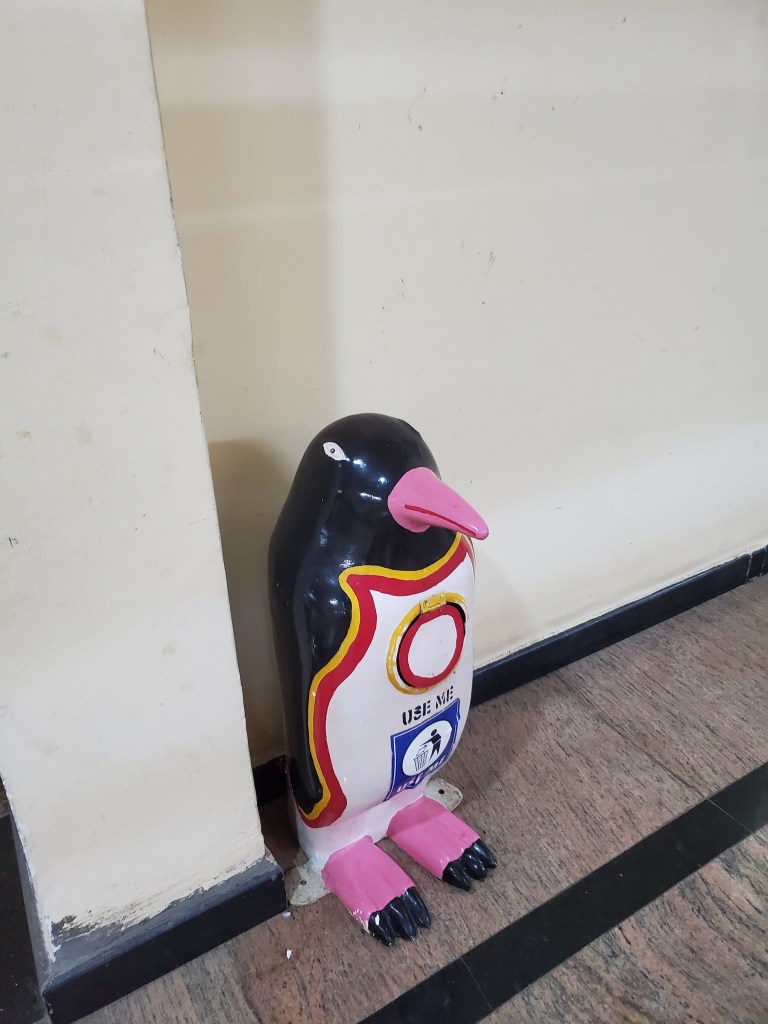
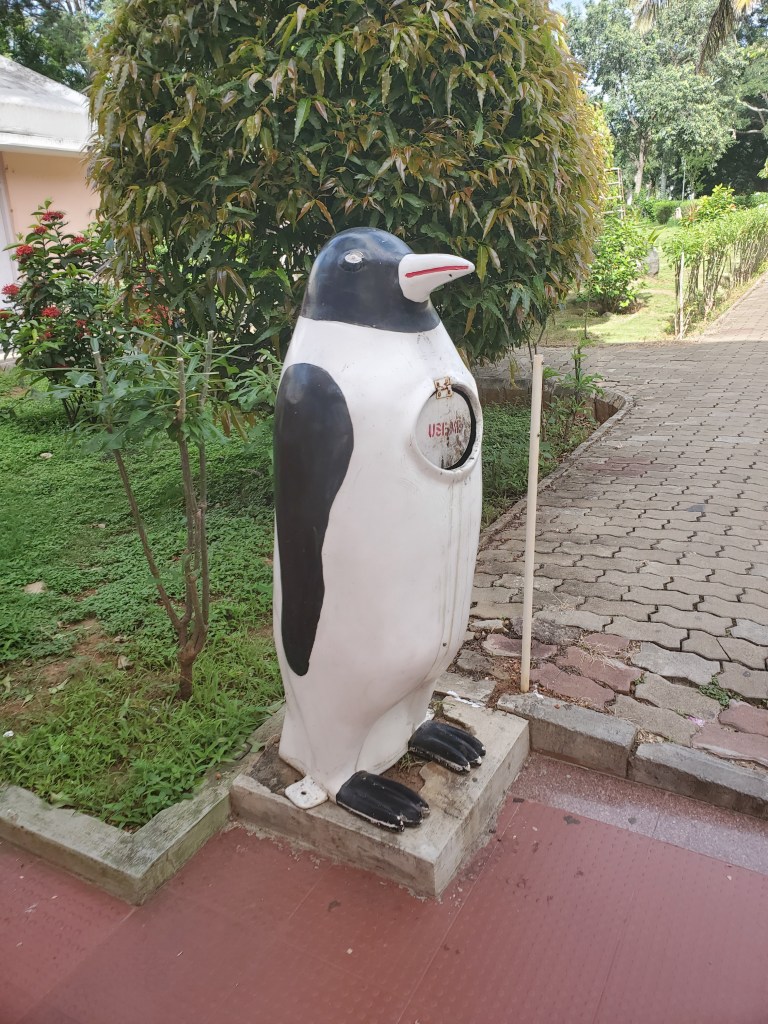
Also, animal-shaped trash cans are a thing here. When I came to JSS on Tuesday, I noticed that there were quite a few penguin statues scattered around the campus and assumed that penguins were the mascot of JSS or that some higher-up was a penguin fanatic. The much more reasonable explanation, as I found out today, is that the penguins are wastebaskets. I’m still not sure why regular-shaped trash bins don’t suffice, but the penguin-shaped ones certainly spice up and serve as a lively addition to the walkways and corridors
The jet lag is also hitting me pretty hard right now. By the time work finishes (around 5pm), I’m feeling pretty sleepy so I end up taking a nap and waking up around 7-10pm. I don’t end up falling back asleep until around 1am though, so my sleep is all in segments.
Thursday & Friday 5.26 – 5.27
I mainly spent the next few days in the lab at PHRI researching cDNA synthesis and RT-qPCR. Even though Medha was a great teacher in explaining these processes yesterday, I thought it would still be helpful to go through them myself to understand each step.
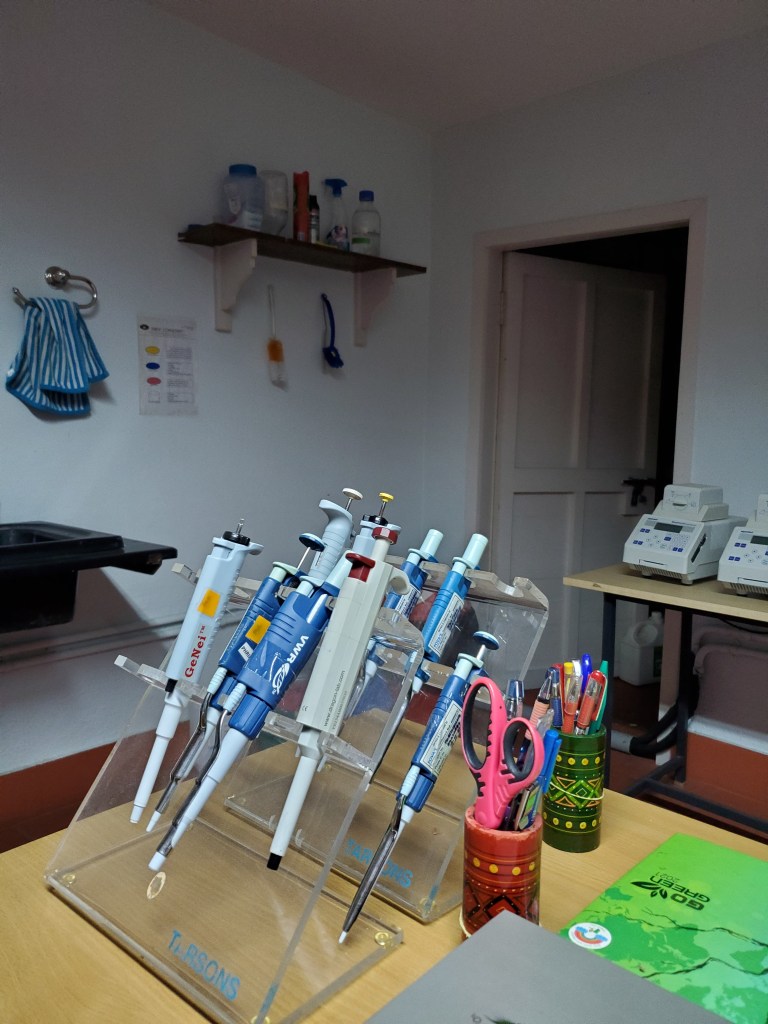
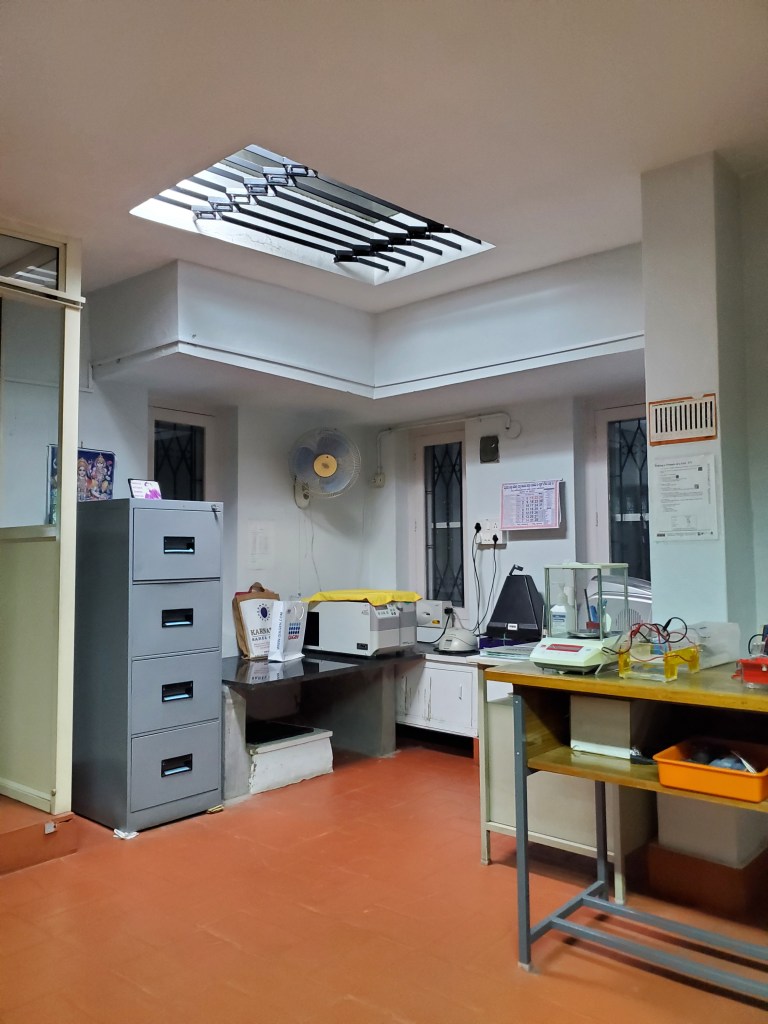
Although note-taking and watching Thermo Fisher videos is tedious and not as exciting as bench work, it brings its own sense of fulfillment when you’re finally able to grasp a concept or work out a confusing calculation. I think one of the most gratifying things about research is this sense of agency. There’s no one forcing me to research cDNA synthesis or RT-qPCR nor will I be tested on this content in an exam – it’s purely for my own sake, for my understanding so that I’m more well-versed in this topic and can contribute in a greater capacity in my lab work.
No matter how I put it though, it’s most definitely monotonous work, and I can’t wait to get back into the lab next week.
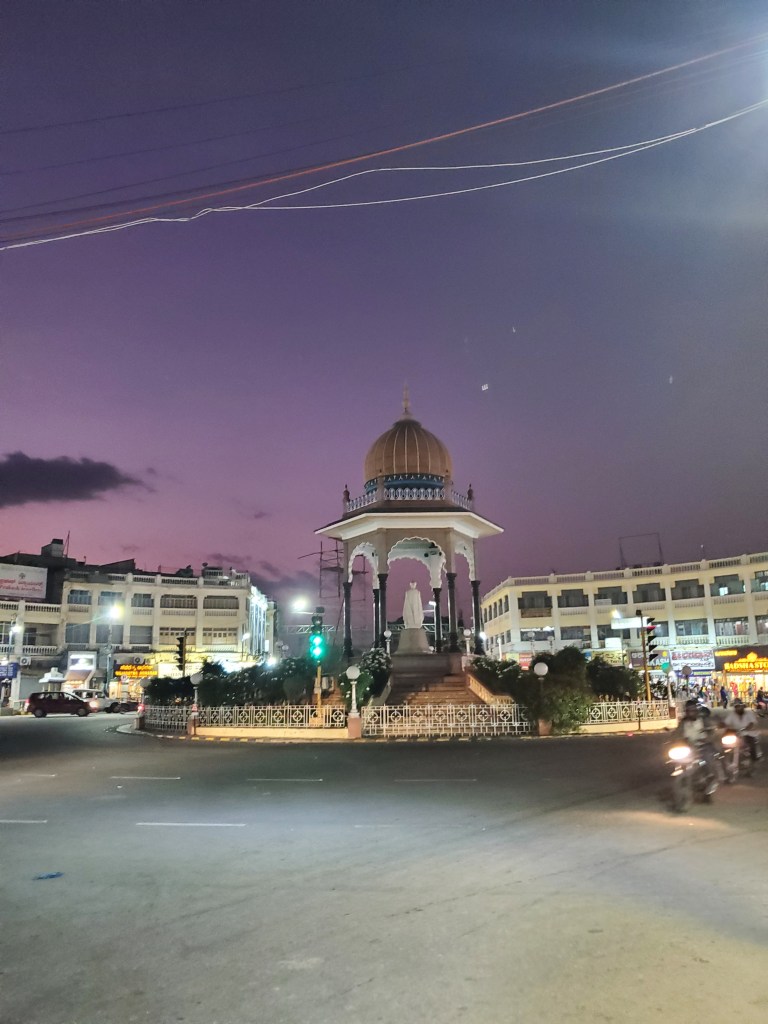
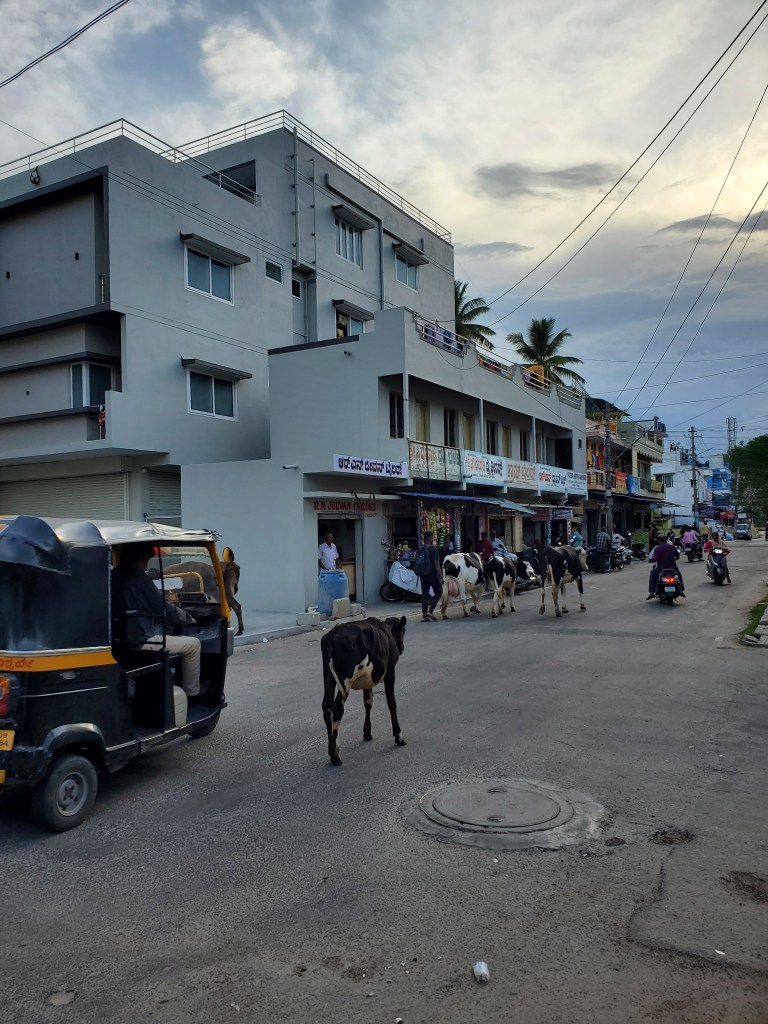
For dinner Friday, Priyanka and I stopped by Casino Park. Per the intern guide, they’re known for their chicken kabob and shawarma, so we ordered those dishes accordingly along with their kerala parotta, coin parotta, and butter chicken. The food was a bit overpriced though and nothing special, in my opinion. We were able to see a few cows as we were walking through the streets though. Another thing I’ve noticed about Mysore is how pretty the sky looks in all my photographs, definitely a plus.
Saturday & Sunday 5.28 – 5.29
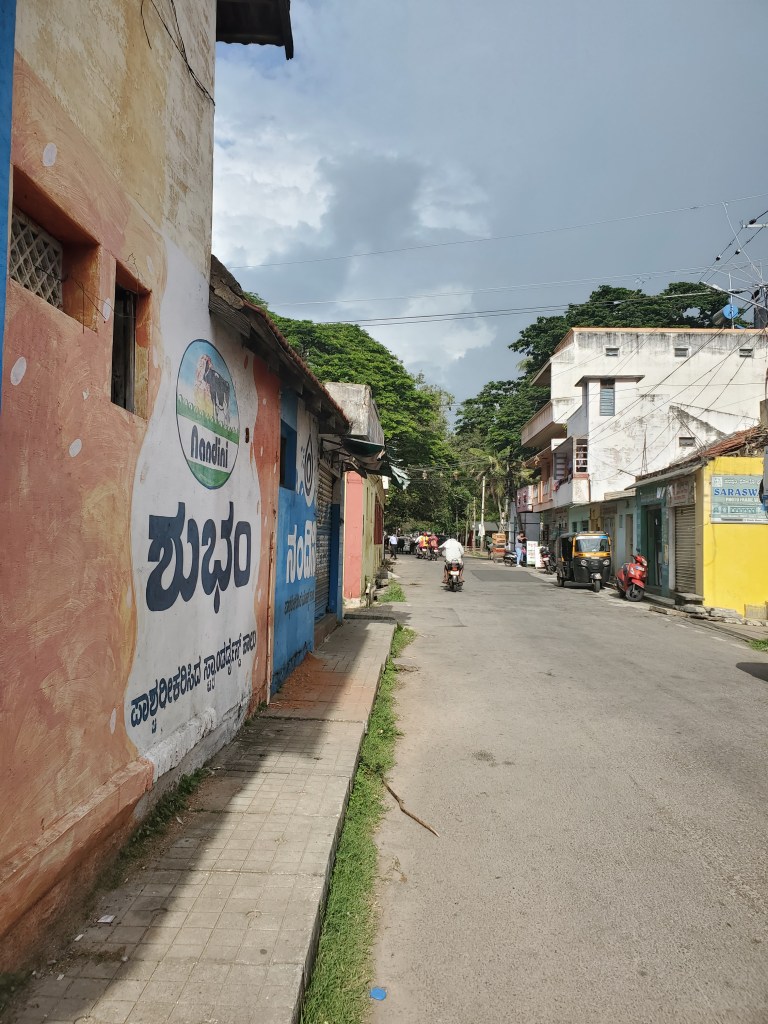
On Saturday, I walked to Loyal World by myself. It was a bit stressful navigating the streets of Mysore armed only with Google Maps to guide me. Here, the autos and two-wheelers zip by at terrifying speeds and it’s a bit like playing Crossy Road but in real-life. I made it to the supermarket all in one piece though and bought a few snacks and bananas.
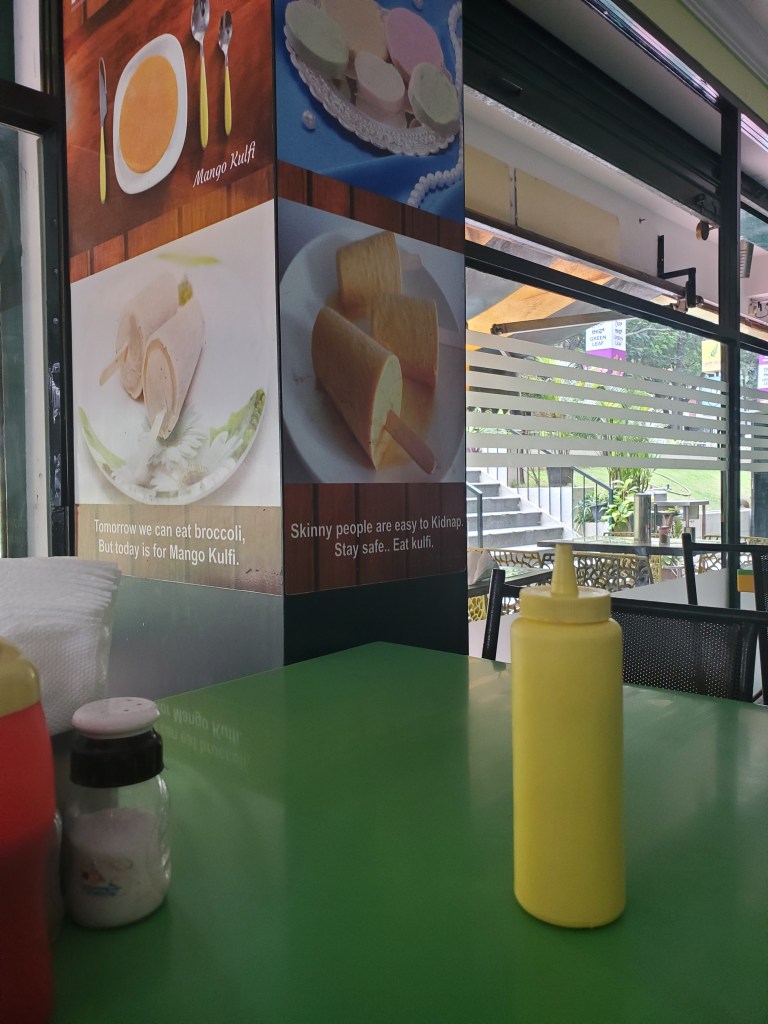
On Sunday, I stopped by a Greenleaf, a restaurant recommended on the intern guide for good veg options located on Kalidasa Road. I saw a video posted by Beryl Shereshewsky featuring gobi manchurian – a dish of fried cauliflower doused in a spicy, sweet chili sauce – so I wanted to try it out for myself. Along with gobi manchurian, I ordered the burnt garlic fried rice and mango juice. This was my first time trying Indochinese food, and it’s definitely not like anything Indian or Chinese I’ve ever tasted. The gobi manchurian was pretty spicy though, so I was glad to have the mango juice to wash everything down.
On the way home I was feeling a bit dizzy though and my stomach started hurting a little later that night. Hopefully, it’s nothing too serious.
Overall, it was a pretty successful first week, and I’m grateful to have learned so much. Huge thanks to everyone at PHRI for making the transition to working in a new country so smooth. I’m looking forward to continuing work on the miRNA project next week and exploring more of Mysore.
 ikalin.travel.blog
Leave a comment