Hopefully, it’s nothing too serious. Famous last words.
I’ve fallen sick to food poisoning. Yippee. I’ll spare you the details, but my updates this week will be brief.
Monday 5.30
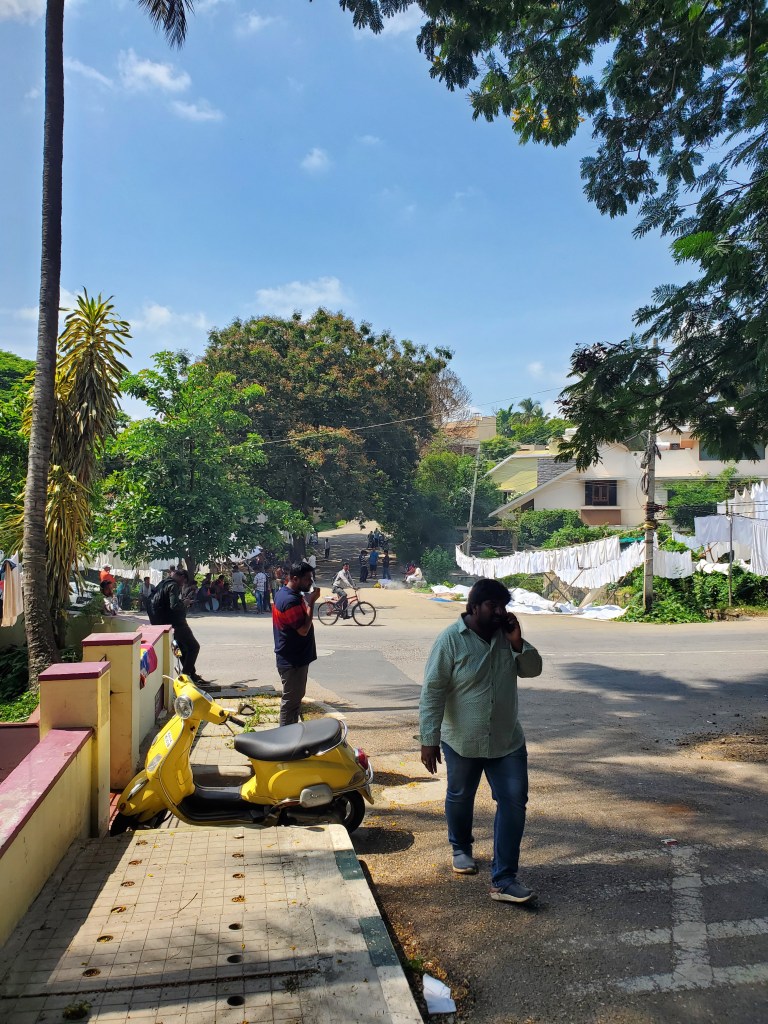
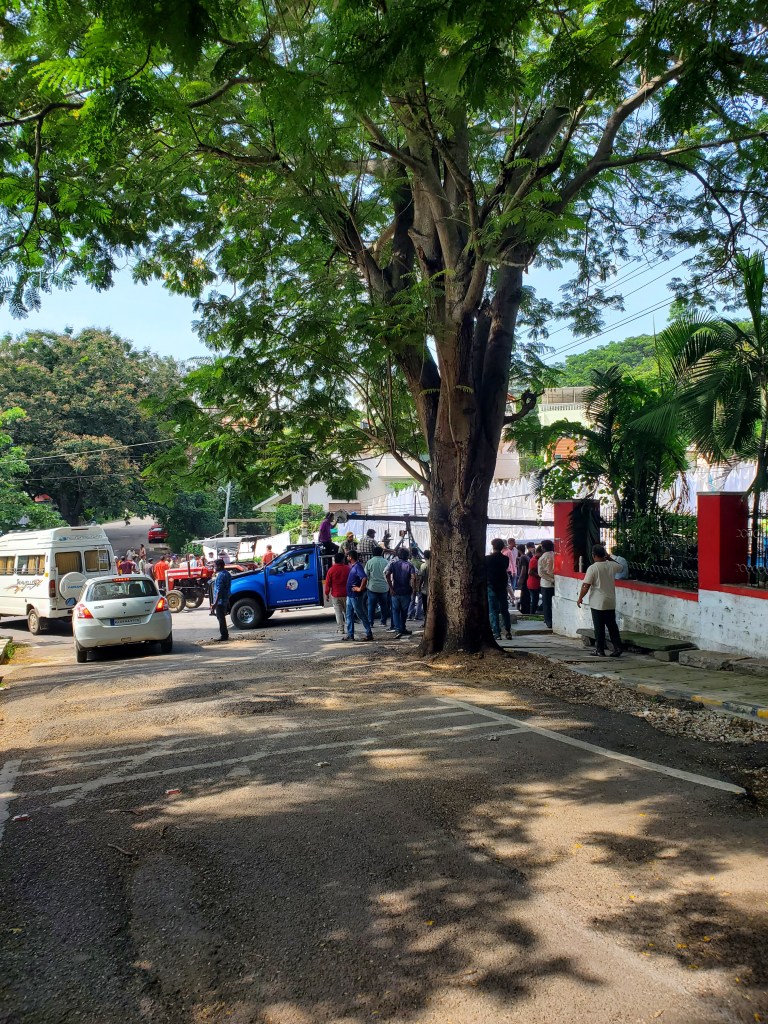
As all the PHRI staff were coming in for work around 9:30am this morning, we kept on hearing drumming outside. Rashmi informed everyone that there were film crews shooting a Bollywood movie down the street by the dhobi ghat, so we all rushed to see. They were apparently filming a funeral scene, as we could see a “body” wrapped in white cloth surrounded by incense and flowers. While we waited for them to begin, Priyanka explained that funeral rituals in India often involve a grand procession in the streets. Off to the side, there was parked SUV from which the lead actor – Nivin Pauly – later emerged. After 30 minutes, Mrs. Jay sent Siddhu to call everyone in. Even though we didn’t actually see any of the film shooting take place, it was definitely an exciting start to the day.
In terms of project updates, Anisa and I went into the lab again on Tuesday and Thursday to isolate RNA samples from serum again, but this time with a modified protocol that included on-column DNAse I digestion and additional wash steps. This SOP was based off the one we used in Dr. Zhou’s lab, but since we’re still waiting for the Qiagen kits to arrive, we had to do with what we could using lyophilized DNAse I powder from JSS without Buffer RDD. It still doesn’t look like our RNA quality is where we want it though, so we’ll have to continue to modify the SOP.
Wednesday 6.1
On Wednesday, Maiya arrived! She’s a PhD student from the University of Arizona studying Health Behavior Health Promotion in Priyanka’s cohort. While at PHRI, she’ll be helping perform qualitative and quantitative analysis of the COVID-19 vaccine hesitancy study PHRI conducted over the past year or so.
Today, I also met Divya and Nimitha, MPH students from JSS Medical College. They’re both trained in dentistry but studying public health. Their work at PHRI will mainly consist of conducting IDI (in-depth interviews) of women in the surrounding villages to assess social support systems during menopause.
With so many new faces, Anisa gave us an orientation today about PHRI that introduced its history, past projects, and current involvements. Mrs. Jay also joined, and we discussed the variety of support networks, both government-funded and NGOs, that exist in the Indian healthcare system. Apparently, for every 1,000 people, there is an assigned ASHA (Accredited Social Health Activist) who is selected from the community to serve as the first point of contact between villagers and the healthcare system. ASHA workers are typically tasked with promoting public health initiatives (e.g. immunizations, clean water, nutrition, basic sanitation and hygiene, reproductive counseling, child health, etc.) and receive some training to deliver basic first aid and vaccinations. Besides ASHAs, there are also Anganwadi centers for every 1,000 people that exist in both urban and rural areas. These government-sponsored programs essentially exist as preschool and community health centers all in one. Through AWW (Anganwadi workers), the government works to combat childhood malnutrition by providing meals for children that include grains, vegetables, and one egg a day so they receive sufficient protein intake. Children under 3 years old are weighed monthly to keep track of their health, and AWW also provide health education to young mothers through home visits and demonstrations.
For PHRII, the AWW and ASHA workers serve as an intermediate to engage the community in research. Prior to going into a village, one of the PHRI counselors/outreach workers will contact the AWW and/or ASHA worker in the morning, who will then recruit in their respective communities to find participants that fit the eligibility criteria of the current study.
Thursday 6.2
Today, Anisa had to process patient blood samples to test their hemoglobin, LDL, cholesterol levels, and other markers, and she volunteered to run a blood panel for me too. We had Rani, the staff nurse, collect 5 mL of my blood, after which we are able to proceed with the various tests. Even though I’ve had blood tests in the past, it was a strange experience processing my own blood and seeing the results in real-time.
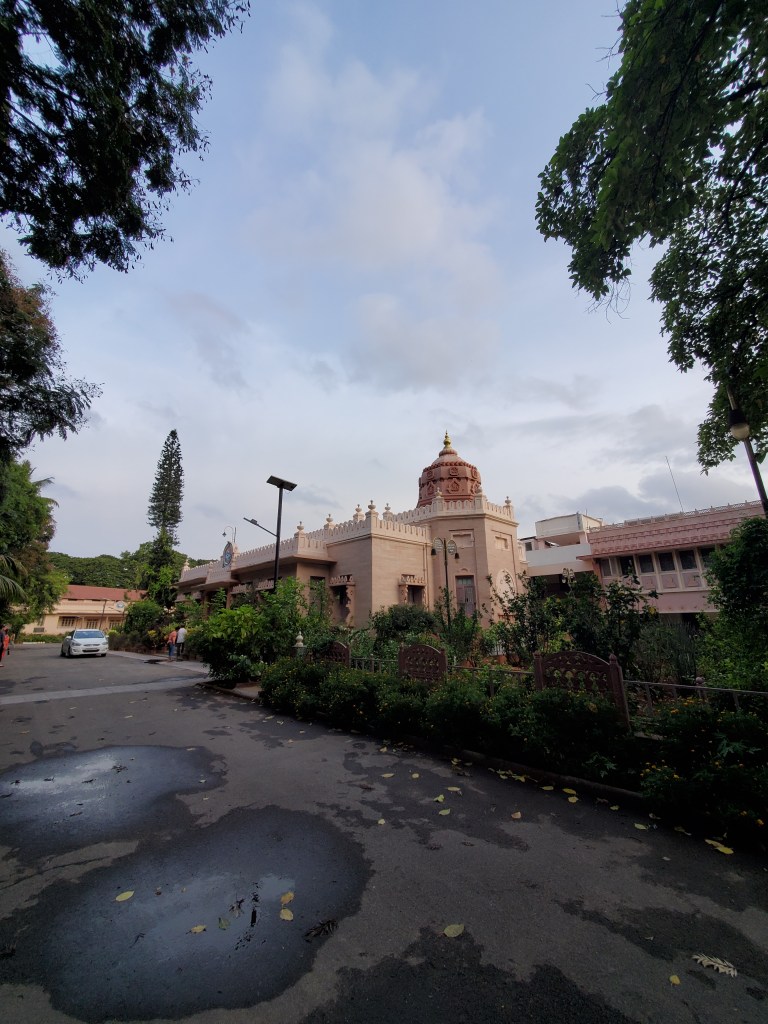
After work, Maiya, Priyanka, and I stopped by Sri Ramakrishna Ashrama on the way back from the supermarket. The architecture was stunning, and the altars inside the meditation space were incredibly well-maintained.
Friday 6.3
On Friday, I was able to go along with Nimitha and Divya as they conducted their interviews in the community. We visited an Anganwadi center, that I initially assumed was a temple because of the sculptures of cows on the roof. Inside, the walls were decorated with colorful paintings of English and Kannada vocabulary words, numbers, and Indian historical figures. Divya and Nimitha explained that the artwork is actually mandated by the government.
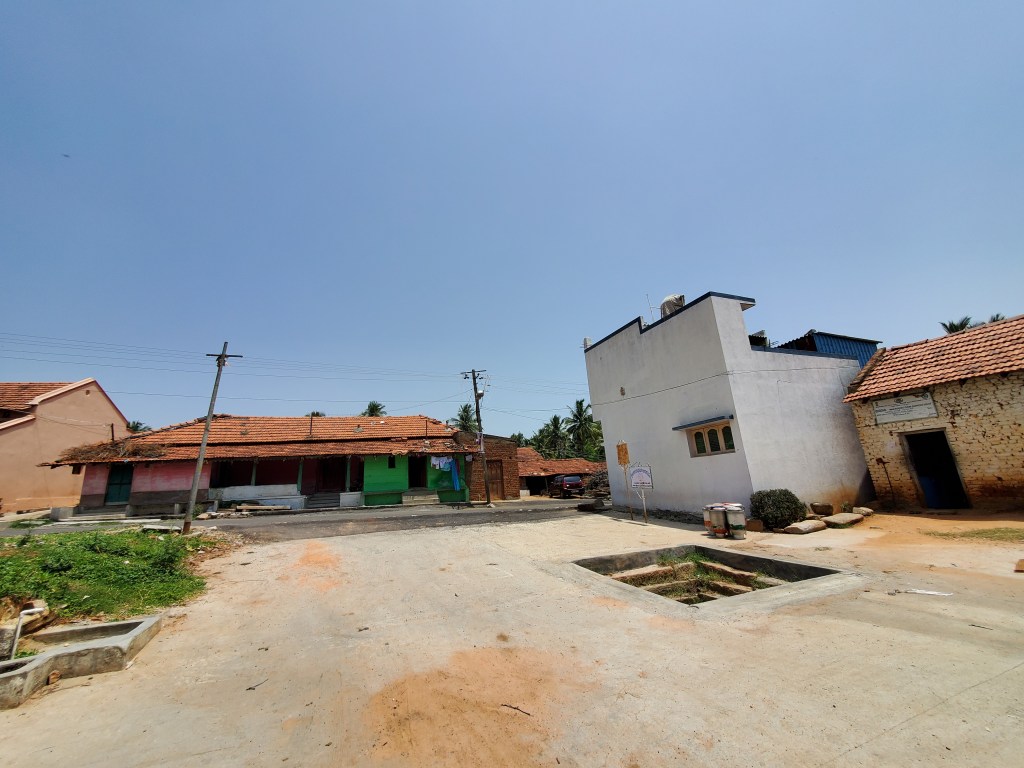
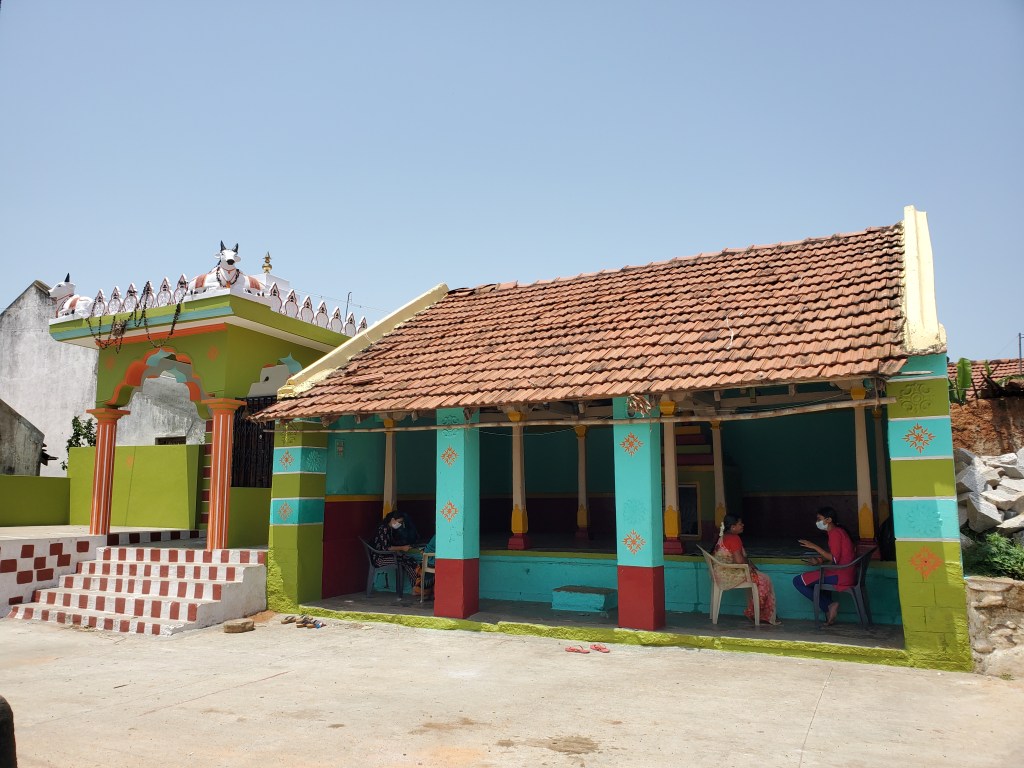
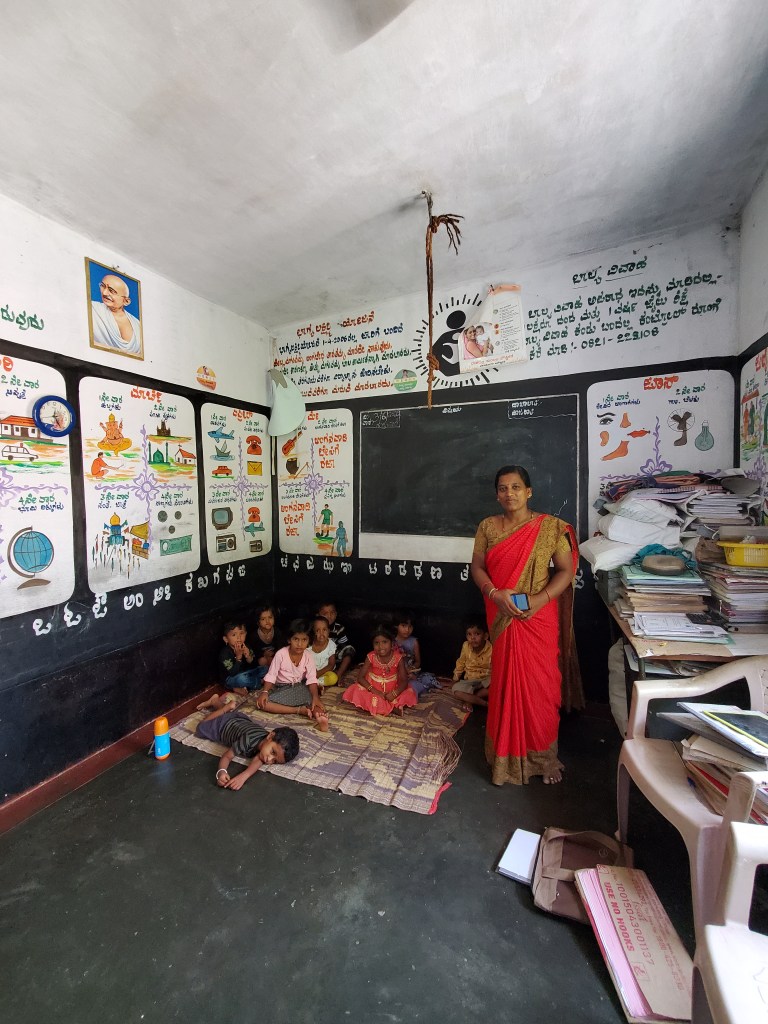
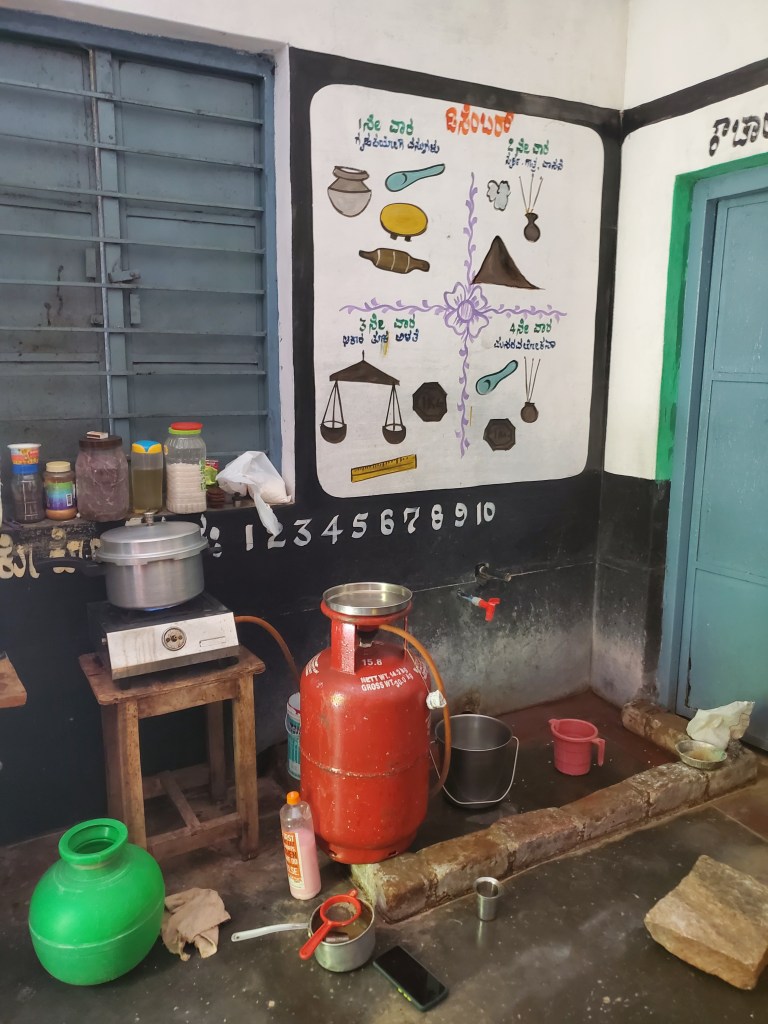
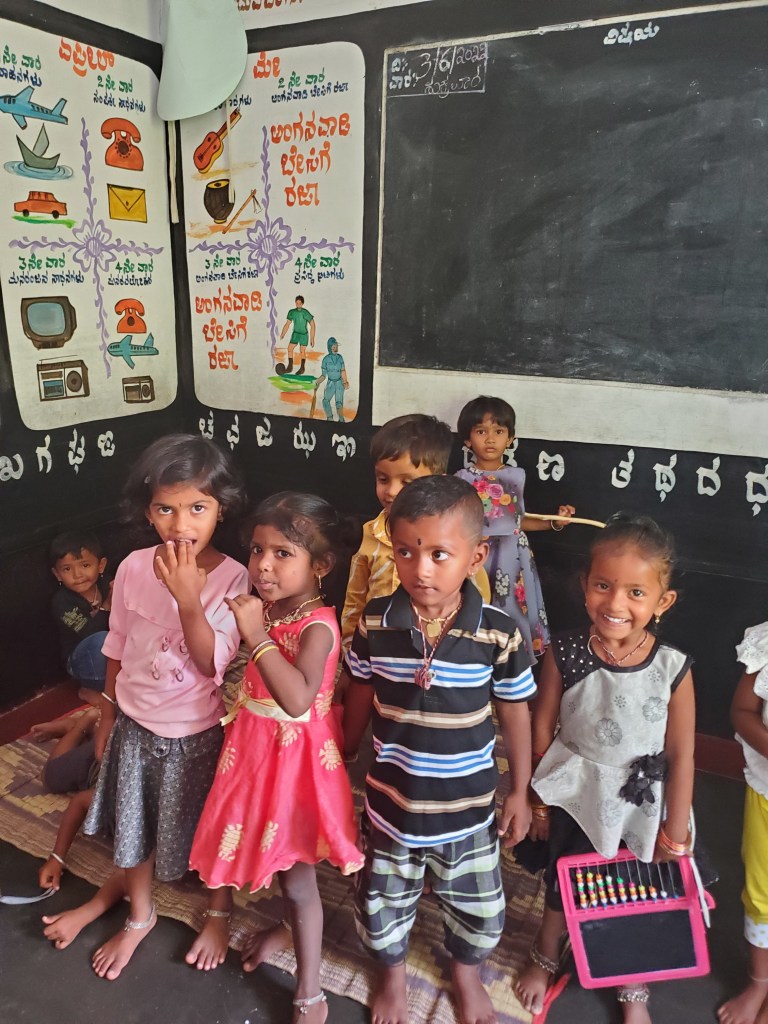
While they conducted their interviews outside the Anganwadi center, Dakshayini (the PHRI outreach worker) and I explored the KRS backwaters nearby the village. The villagers often wash their clothes in this river, so there were a few stray socks lying around the riverback. On our way back, we encountered a stubborn cow that Dakshayini (unsuccessfully) tried to scare away with a stick for a few minutes, after which it thankfully meandered away.
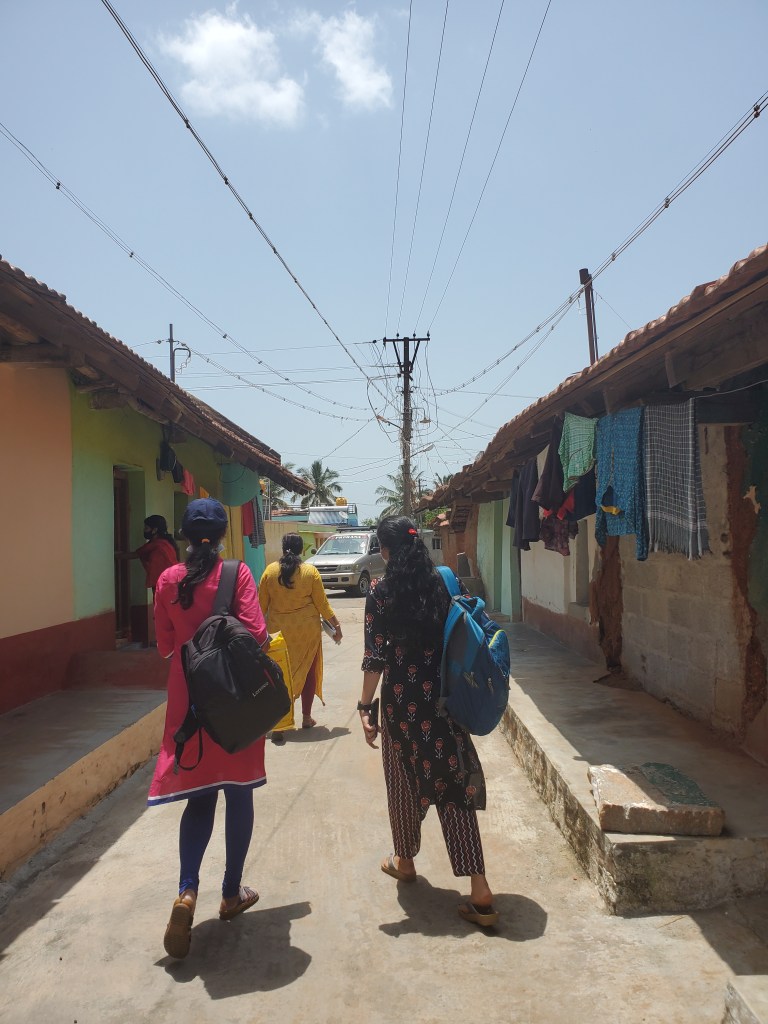
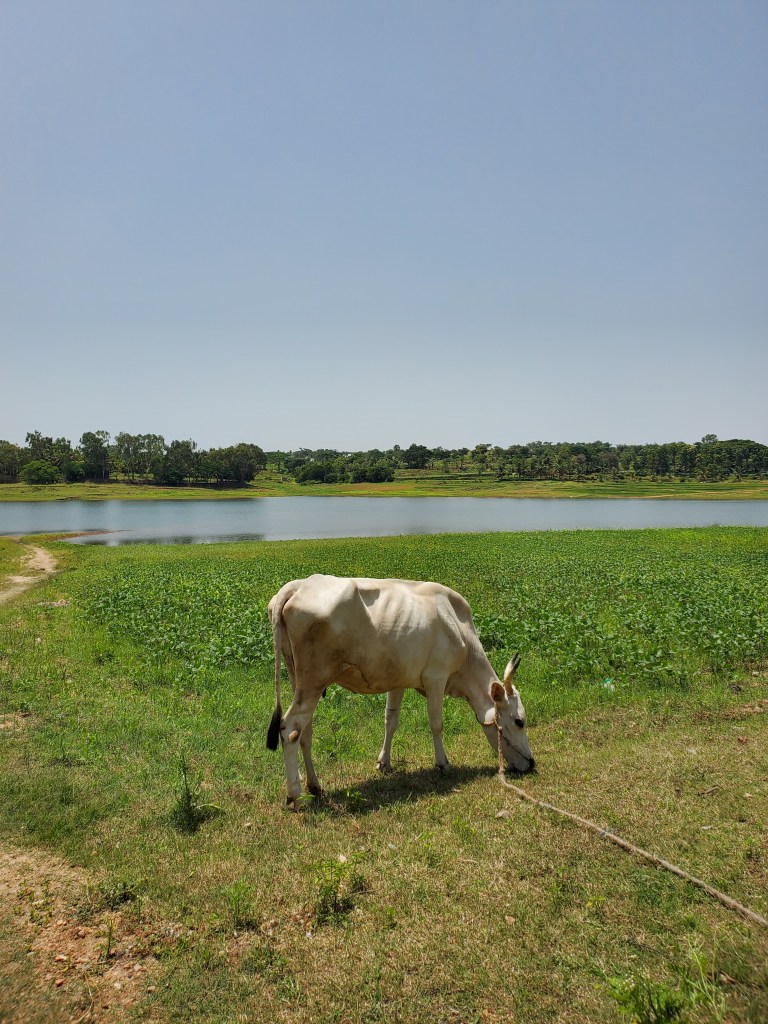
It was honestly really exciting to see how an Anganwadi center operates. It surprised me to learn that even in a lower/middle-income country like India, its healthcare system seems much more progressive than in the US. Despite its flaws, there appears to be at least government support for the health and well-being of its citizens in that there exists a framework to allocate resources and provide perinatal care for both the mother and child. A program like this would likely be lambasted as too socialist in the United States, but the efforts AWW and ASHA workers are involved in honestly just provide basic necessities and care that all people deserve, regardless of socioeconomic status. It’s disheartening to see that something so commonplace in India – this respect for children and mothers and the willingness to provide for their well being – isn’t the case in the United States. Nevertheless, it is still fascinating to see how allied health and healthcare systems operate in different parts of the world.
WEEKEND 6.4 – 6.5
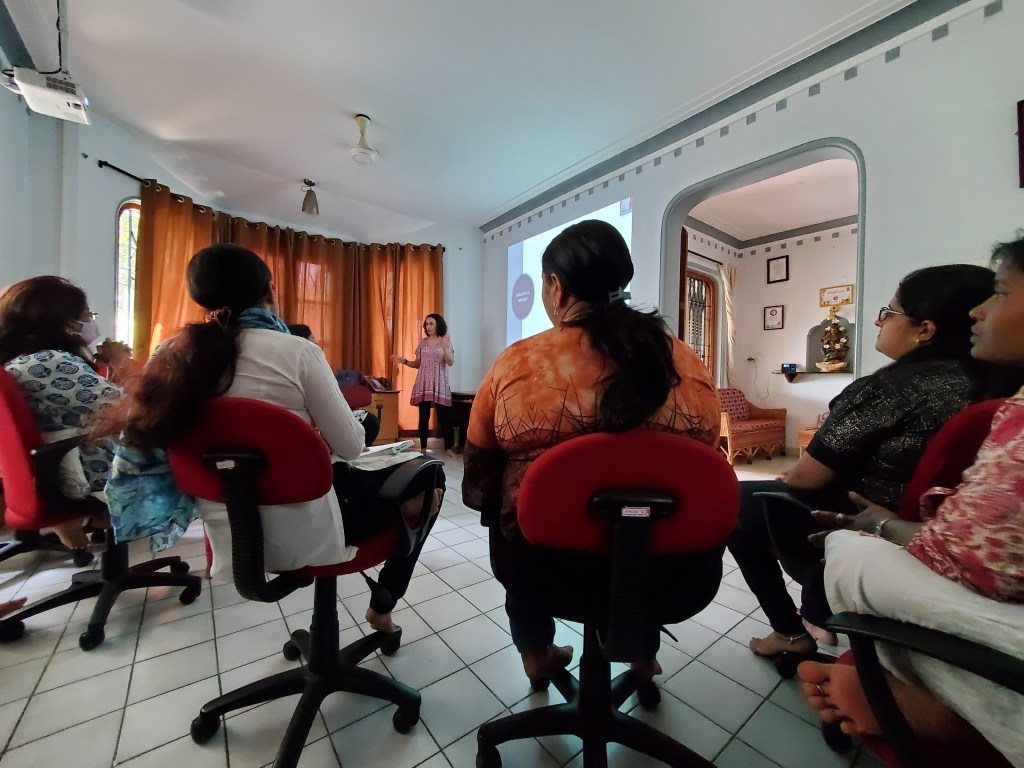
On Saturday, Maiya gave the PHRI staff a presentation on Qualitative Codebook Development and Coding. From the title, I assumed that we were going to learn about basic Python skills, but it turns out that coding has an entirely different meaning in qualitative research. Even though I knew the difference between qualitative and quantitative data, apparently, there’s also qualitative and quantitative methods and interpretation in research. Also, there’s so much work that goes on in qualitative research beyond conducting interviews and distributing surveys than I expected. I had no idea that this much work goes on behind the scenes in public health research, and this internship has definitely been great exposure to explore what other types of research exist.
 ikalin.travel.blog
Leave a comment